Loading...
Serving Longview, TX and surrounding areas. (430) 267-1851
Dips, rough patches, and uneven floors cause cracked tile and flooring failures. We pour self-leveling overlays that correct the problem at the source - so your next floor goes down right the first time.
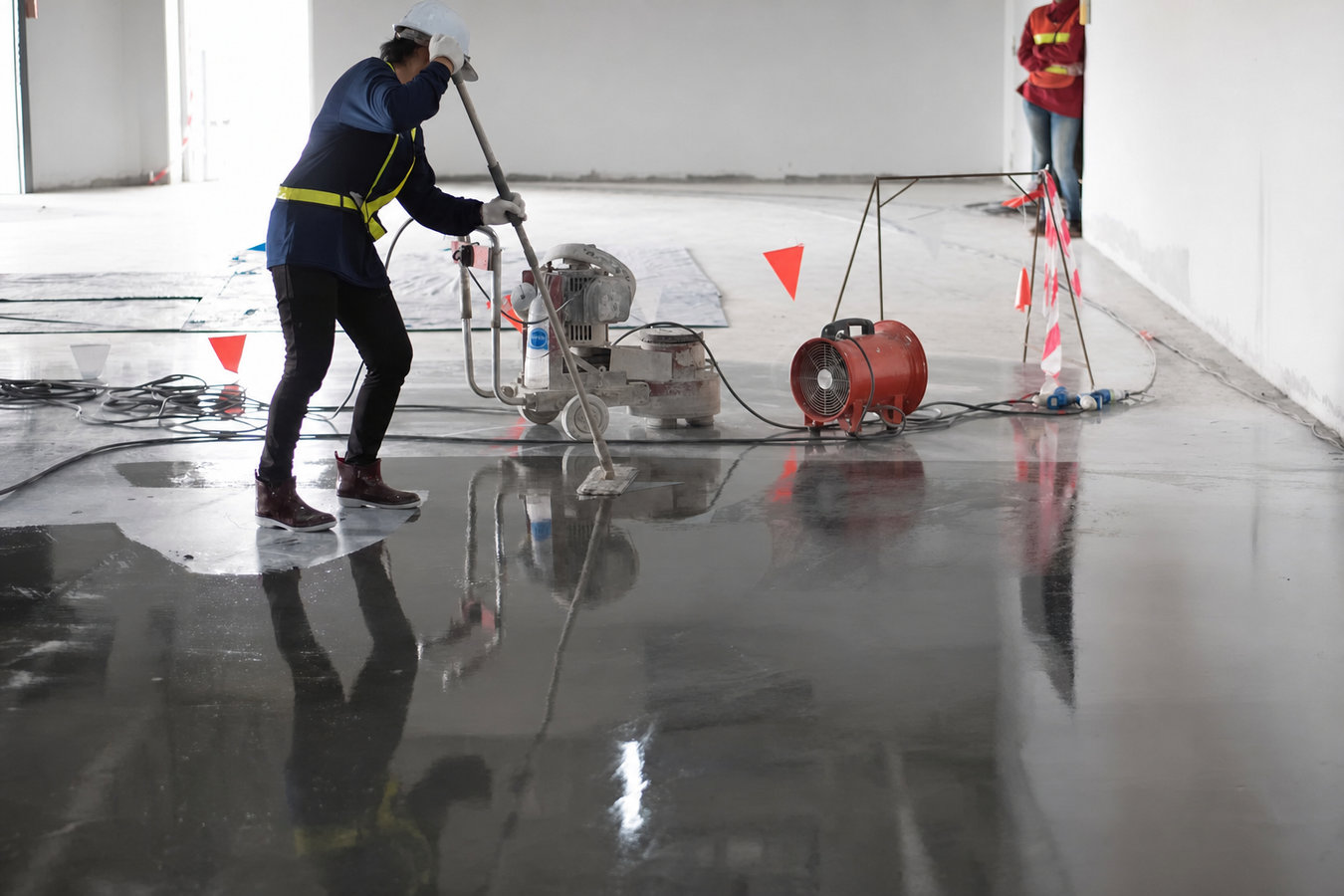
Self-leveling concrete in Longview is a specially mixed material that flows across an uneven floor and settles into a smooth, flat surface on its own - most garage and interior jobs are completed in a single day and the floor is walkable within a few hours.
If your floor has dips, humps, or rough patches, a self-leveling pour fills in the low spots and creates a flat plane without tearing out the existing slab. That matters most when you are preparing to install tile, hardwood, or luxury vinyl - flooring installers need a flat, stable base, and skipping this step leads to cracked grout, hollow spots under planks, and flooring that fails early. It also matters for garage floors and patios where an uneven surface causes water to pool.
Self-leveling work pairs well with a broader surface refresh. When your slab also has significant surface deterioration or needs a new look, combining leveling with a decorative concrete resurfacing overlay gives you both a flat surface and a finished appearance in a single project.
If you set a marble on your floor and it rolls on its own, or if your furniture wobbles even on a hard surface, your floor is not level. These dips and humps are exactly what self-leveling concrete is designed to fix. Left alone, an uneven floor makes tile crack at the grout lines and causes hardwood planks to flex and squeak over time.
If a flooring contractor has told you the floor needs to be leveled before tile, luxury vinyl, or hardwood can go down, self-leveling concrete is almost certainly what they have in mind. Skipping this step leads to cracked tile, hollow spots under vinyl planks, and flooring that fails prematurely. Getting the subfloor right protects your flooring investment from the ground up.
If water sits in puddles on your garage floor or patio after Longview's heavy spring rains rather than draining away, the surface has settled unevenly. Pooling water accelerates surface deterioration and can work its way under the slab over time. A self-leveling pour corrects the grade so water moves where it should.
Fine surface cracks and a rough, crumbling texture are signs that the top layer of your slab has worn out. This is especially common on older Longview slabs exposed to decades of East Texas heat and humidity. An overlay restores a smooth, solid surface without the cost and disruption of full slab replacement.
We handle self-leveling pours and decorative overlays for garages, interior rooms, patios, and commercial spaces throughout Gregg County. Every job starts with a moisture test - Longview's clay soil holds water, and a slab wicking moisture from below will cause any overlay to fail if that is not addressed first. We grind and mechanically prep the existing surface before any material is poured, because bonding requires a clean, profiled substrate. The leveling material flows into low spots and creates a flat plane, typically one-eighth to one-and-a-half inches thick depending on how uneven your floor is.
For homeowners who want more than a plain gray finish, we also offer decorative overlay options - integral color, staining, or texture - that transform the look of the space while solving the leveling problem at the same time. When a project needs pool deck coatings or outdoor surface work alongside the leveling, we coordinate that as part of a single project scope to minimize disruption and cost.
For homeowners who need a flat, stable base before tile, hardwood, or luxury vinyl goes down - prevents cracked grout and hollow spots that cause early flooring failure.
Corrects uneven garage slabs and rough surfaces in one project - gives you a flat, clean floor that drains properly and is ready for a coating or plain finish.
For homeowners who want leveling and a fresh appearance - integral color, stain, or texture applied during the overlay phase creates a finished look without a second project.
Addresses low spots and uneven settling on outdoor concrete so water drains away properly and the surface is safe and comfortable underfoot.
Longview sits on highly expansive clay soils - the kind that swell when wet and shrink when dry. That constant movement puts stress on concrete slabs over time, causing them to crack, heave, or settle unevenly. Many homes in established Longview neighborhoods were built in the 1960s through 1980s, and their original slabs have had decades to shift and deteriorate under the influence of East Texas heat, rainfall averaging around 47 inches per year, and repeated soil expansion cycles. Homeowners in areas like White Oak and Lindale face the same soil conditions and often find that older slabs need more prep work and leveling than newer construction before any overlay can be applied successfully.
Longview's climate also creates specific challenges for self-leveling work that require local know-how. Summer temperatures regularly exceed 95 degrees, and a concrete slab in direct sun can get even hotter - which causes leveling material to set up too fast and produce an uneven finish. High relative humidity for much of the spring and summer also affects how well the overlay bonds and cures. Experienced local contractors schedule pours for cooler morning hours in summer and test every slab for moisture before starting. That moisture test is not optional here - Longview's clay-heavy soil holds water, and pouring over a slab that is wicking moisture from below will cause the overlay to fail.
Tell us what room or area you are dealing with and what the floor looks like now. We ask about what you plan to put on top of it, then schedule a site visit to see the space in person. Do not trust a quote given over the phone without a visit - the condition of your slab makes a big difference in what the job actually involves.
We walk the space, check how uneven the floor is, look for cracks or soft spots, and test for moisture coming up through the slab. In Longview, that moisture test matters - the clay soil here holds water, and a slab wicking moisture from below needs to be addressed before anything is poured. You get a written estimate that spells out what is included and what the finished result will look like.
We grind or mechanically clean the existing surface to remove any paint, adhesive, grease, or loose material. This roughens the surface so the new layer bonds tightly. If this step is done right, the overlay will last for years. If it is rushed, the overlay will eventually peel or crack - and it is never a step we cut.
The self-leveling material is mixed and poured across the prepared surface. It spreads and fills low spots on its own, typically firm enough to walk on within a few hours. Full cure takes 24 to 72 hours. Before we leave, we walk through the finished work with you and explain how to care for the surface - including when it is safe for vehicle traffic and what cleaning products to use.
Free written estimate after a site visit - no obligation, no pressure. We reply within one business day.
(430) 267-1851We test every slab for moisture before any material is poured - not after. In Longview, where the clay soil holds water and humidity is high much of the year, this step is not optional. A pour over a slab wicking moisture from below will fail, and we would rather flag the problem upfront than deliver a floor that fails within a year.
We grind and mechanically clean the existing surface before pouring anything. That profiling is what makes the new layer bond tightly to the old slab. Skipping or rushing prep is the single most common reason self-leveling overlays bubble, peel, or delaminate within the first year.
Longview's summer heat causes leveling material to set too fast if poured at the wrong time of day. We schedule summer pours for early morning and use products suited to warm, humid conditions. The ASTM F710 standard for concrete floor preparation guides our approach to moisture testing and surface profiling before any pour.
You get a written estimate that breaks down the prep, the pour, any decorative work, and the sealer separately. The number you agree to is the number you pay. We do not give phone quotes for leveling work - the condition of your specific slab is what determines the real cost, and we only know that after we have seen it.
A properly done self-leveling job is invisible - you should not be able to tell where the old floor ended and the new material began. That is the standard we hold every pour to, and it is why our work holds up through Longview summers and wet springs.
Slip-resistant coatings and resurfacing for pool decks that handle Longview's heat and UV exposure while keeping the surface safe and comfortable underfoot.
Learn MoreWhen your slab needs more than leveling - a full decorative or plain overlay transforms worn concrete into a clean, durable surface that looks like new construction.
Learn MoreWe have openings this month - call now or submit an estimate request and we will confirm within one business day before spots fill up.